Chapter Four
Next: how to taste it.
Six breweries, six philosophies — now that you know them, the next thing you need is how to enjoy. Instead of focusing on technical classifications, we introduce practical tips travelers can use on the spot to choose sake by the dish in front of you and the moment you’re in.
Why Sake?
Where Umami meets Umami
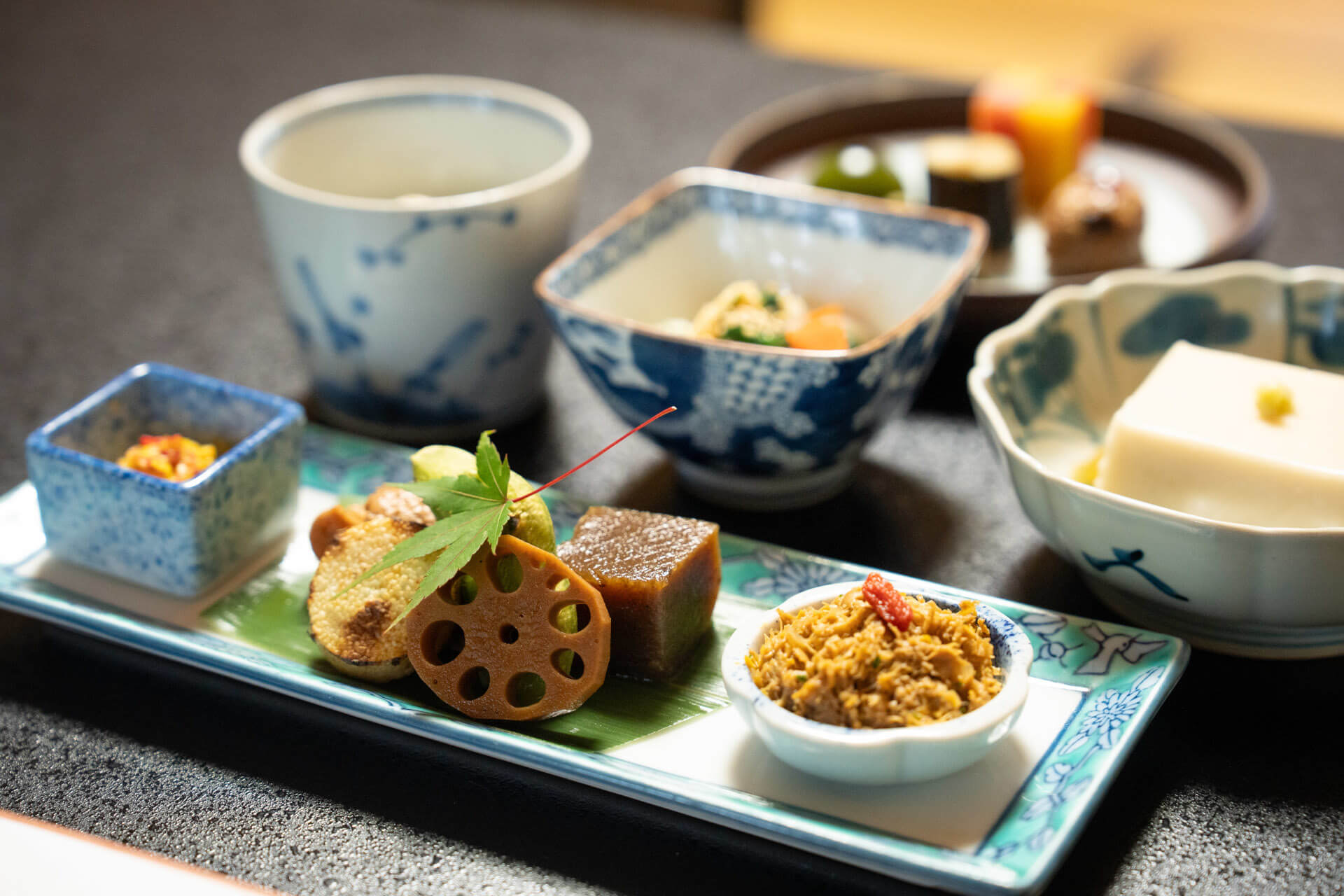
Pair sushi or sashimi with a red wine, and you can end up with an unexpectedly metallic, tannic bite. That’s the wine’s tannins reacting with the fat in the fish, leaving an unpleasant aftertaste. Sake carries none of that risk.
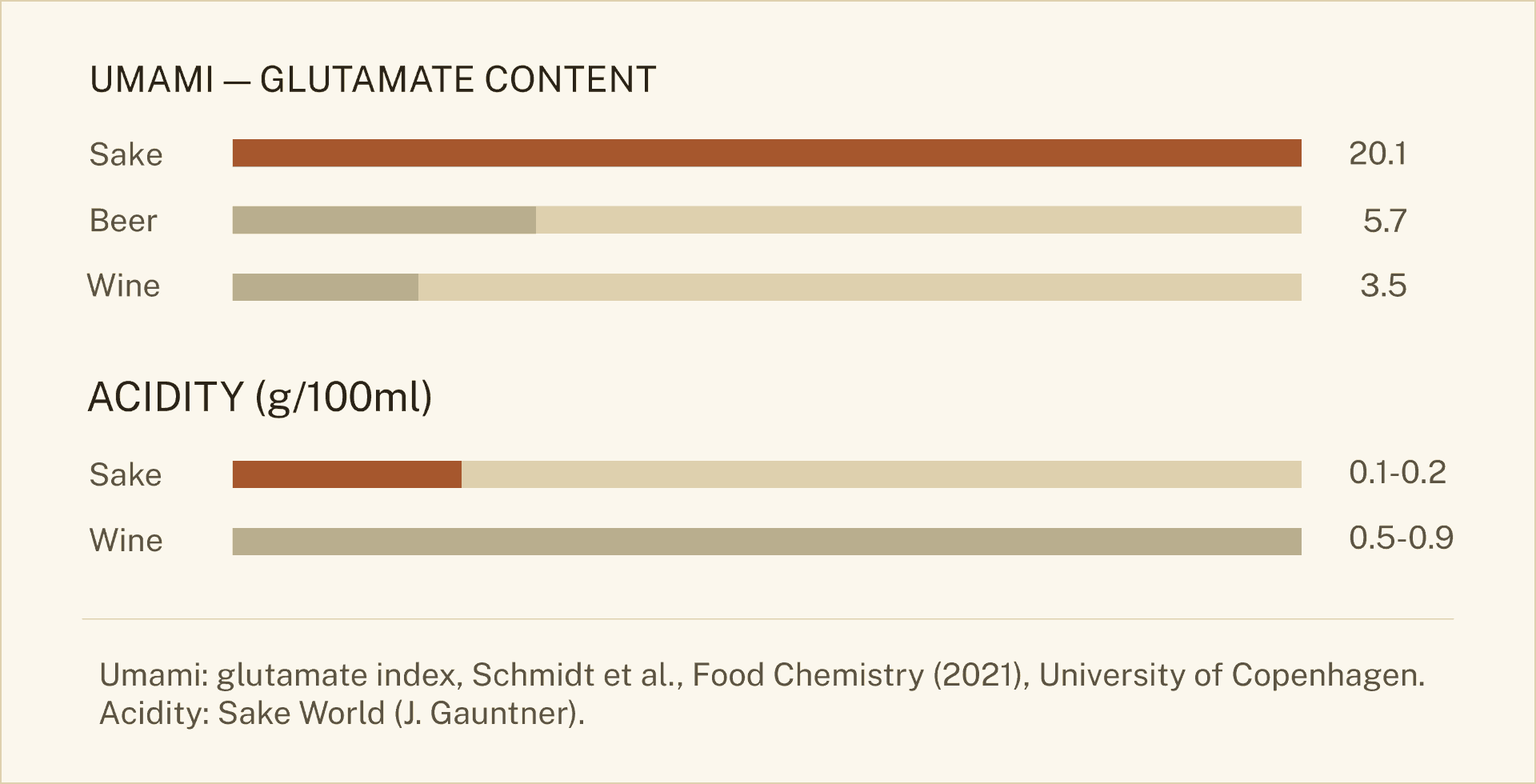
One reason lies in our sense of taste. Identified in 1908 by the chemist Kikunae Ikeda, it’s the taste running through fish, kombu, cheese, tomatoes, and much of what makes Japanese cooking what it is. Sake carries far more of the amino acids behind umami than beer or wine does — a byproduct of rice protein breaking down during fermentation. Put an umami-rich sake next to an umami-rich dish, and instead of competing, the two lift each other up.
Another is the gentle acidity. Sake’s acidity typically runs at a fraction of wine’s, and that softness is part of why it never overwhelms a delicate ingredient.
The more you love natural wine or craft beer, the more this difference should surprise you. Sake, after all, grew up alongside Japanese food itself.
How to Enjoy Sake
Choosing by dish and occasion
Sake professionals sort every bottle into four families: sōshu, kunshu, junshu, and jukushu — a system that maps aromatic intensity and body the way wine people talk about aroma and weight. Recast in plain terms, each one is easier to hold onto: the light, easy-drinking sake; the fragrant, aromatic sake; the rich, umami-forward sake; and the sake with the deep character of age.
Sake has one more standout trait: it’s just as much at home chilled, at room temperature, or warmed — few drinks in the world are served across such a wide temperature range. Wine tends to have one right serving temperature; sake’s aroma and umami shift so much with heat that the same bottle can show several different faces. Each of the four styles below has its own ideal range.
Sōshu
The Light, Easy-Drinking Sake
This is the clean, straightforward pour you’ll encounter at most breweries. Think of it as sake’s answer to a session beer: restrained in both aroma and weight, and light enough to keep pouring glass after glass. If you’re new to sake, starting here makes the whole landscape easier to read. Serve it chilled or at room temperature, alongside light, ingredient-forward dishes like chilled tofu, grilled fish, or salad.
Kunshu
The Fragrant, Aromatic Sake
Polish the rice deeper than usual before brewing, and you get a heady lift of pear and melon — the signature of a style called ginjo. If you gravitate toward a crisp Sauvignon Blanc or an off-dry Riesling, this will feel surprisingly familiar. Serve it well chilled, in a wine glass that lets the aromatics open up. It pairs beautifully with sashimi and light appetizers.
Junshu
The Rich, Umami-Forward Sake
Kimoto — the style you saw pairs so well with game and rich meat — is its clearest example. Instead of adding lactic acid, this method relies entirely on the wild microbes living in the brewery to build up the shubo (the starter culture from Chapter 1), and the result is a full-bodied, tangy sake that calls to mind a natural wine’s wild-yeast ferment or the layered sourness of an amber ale. Kubo Honke Shuzo in Uda, working from its philosophy of pushing fermentation all the way through (kanzen hakkō, from Chapter 3), makes a cloudy kimoto nigori that embodies this style perfectly. Warm it to around 68–104°F (20–40°C) and the rice’s umami comes through with more definition. Pair it with game, red meat, or an aged cheese.
Jukushu
The Sake with the Deep Character of Age
Aged slowly until it turns amber, koshu develops a complex flavor of caramel, nuts, and dried fruit that should win over any sherry or aged-whisky drinker in a single sip. Warm it gently, serve it in an earthenware cup, and take your time with it after the meal. Kijōshu takes a different route to richness, brewed with sake itself in place of some of the water — the result is intensely concentrated and sweet, closer to a botrytized dessert wine or an ice wine. Nishiuchi Shuzo in Sakurai pushes the idea one step further still with what it calls ruijōshu — the technique from Chapter 3 that uses kijōshu itself, in turn, as the brewing water for another batch, taking this whole direction about as far as it can go. Pour it as an aperitif, or alongside dessert.
Four Steps to Tasting
You don’t need a sommelier’s vocabulary
Step 1
Color
Tilt the glass against something white. The closer to clear, the more delicate the sake tends to be; the more it leans gold, the more likely it’s aged and full-bodied.
Step 2
Aroma
Give the glass one light swirl and take it in. Floral or fruity notes point toward a fruit-forward ginjo style; rice- or earth-forward notes point toward a traditional kimoto or yamahai.
Step 3

Taste
Let it sit on the middle of your tongue for a moment before swallowing. This is the moment to feel out, in your own words, where the sake sits on the flavor map below — your reference point for every bottle you try after this trip.
Step 4

Pairing
Pour the light, easy-drinking sake casually alongside everyday meals; serve the fragrant, aromatic sake with sushi, the way you would a white wine; match the rich, umami-forward sake with meat; and treat the sake with the deep character of age the way you would a sherry or dessert wine, after the meal. Your first three answers point you naturally to the last one.
The Flavor Map
Understanding sake along two axes
The character of Sake can be read along two axes: how much aroma it throws — fragrant and fruity at one end, quiet and understated at the other — and how much weight it carries on the palate — light and clean at one end, rich and umami-forward at the other. Cross those two axes, and the four styles from the section above each claim their own quadrant on the map. Place whatever you’re drinking that day inside it, and choosing what to try next starts to feel intuitive. The sake from each of the six breweries on this tour sits in its own distinct spot inside it, too.
Sake Meter Value and Acidity Level
Understanding the number on the label
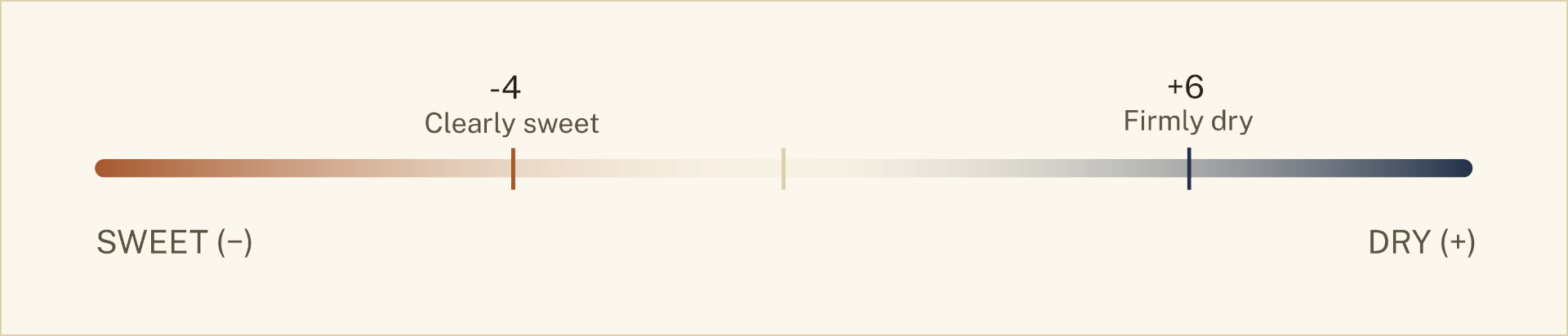
There’s another clue printed right on the label: a number called the Sake Meter Value, or Nihonshu-do in Japanese. It’s based on specific gravity — the further into positive numbers, the drier the sake; the further into negative numbers, the sweeter. As a rough guide, +6 or higher signals a firmly dry sake, and -4 or lower signals a clearly sweet one.
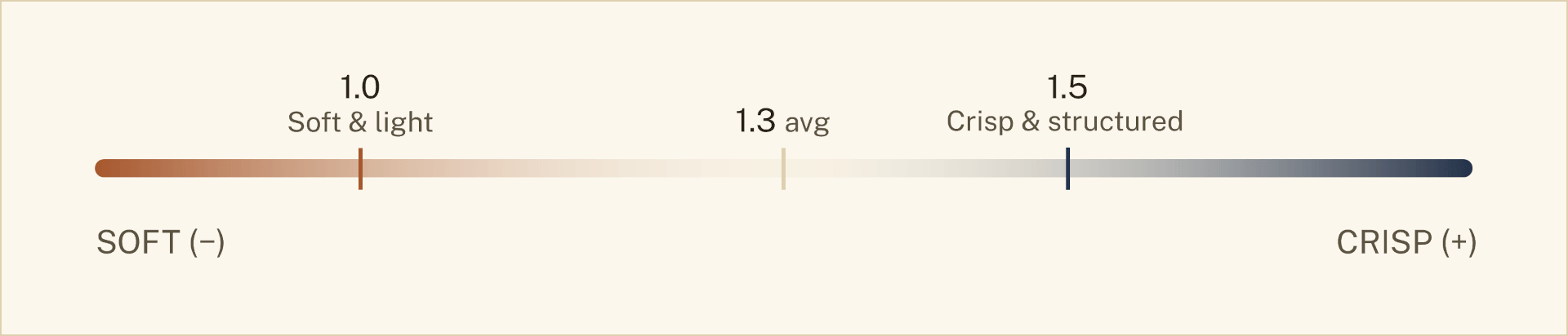
There’s another number you’ll often see on the label: Acidity Level, or sando in Japanese. It tracks the concentration of organic acids — lactic, malic, and others — that the sake carries, and it averages around 1.3. Below 1.0, a sake tends to feel soft and light; above 1.5, it leans crisp and structured.
It’s a bit like checking the residual sugar or acidity on a wine label — a sense of the sake’s shape before it ever touches your tongue. That said, aroma still shapes how a sake actually tastes, so treat these numbers as a first clue rather than the final word. One note: the sake-versus-wine acidity comparison shown earlier in “Why Sake?” measures sake and wine as whole beverage categories. The Acidity Level on a label — a number specific to that one bottle — is a different measure, calculated a different way.