Chapter Two
One prefecture, many stories of place
What shapes a sake’s flavor isn’t just the yeast or the brewer’s skill. The water used in the mash, the climate wrapped around the brewery, the rice a brewery chooses, and how far that rice is polished, how it’s pressed, how it’s finished — stacked one on top of another, these choices are what give a sake its character.
Craft beer runs on the same idea. Burton-on Trent pale ale gained its unique character thanks to the region’s hard water of that one English town. Some Belgian Trappist breweries use the very same yeast strain, yet turn out beers with completely different personalities simply by varying fermentation conditions and brewing schedules. Water, climate, and the choices made along the way — combined, these are what give a brewer’s work its own signature. Sake works the same way. Which water is drawn, which climate the sake is brewed in, which rice is chosen and how, and how it’s all put together — that combination is what shapes each brewery’s individual character.
The six breweries on this tour are spread across very different parts of Nara Prefecture: Sakurai, Yoshino, Uda, Gojō, Katsuragi, and Ikoma. Even within the same prefecture, each brewery differs in its water, its climate, its choice of rice, and how it brews. Look only at these six breweries, and you won’t find a single character. You’ll find six.
Water
Different sources, Even in Nara in same prefecture
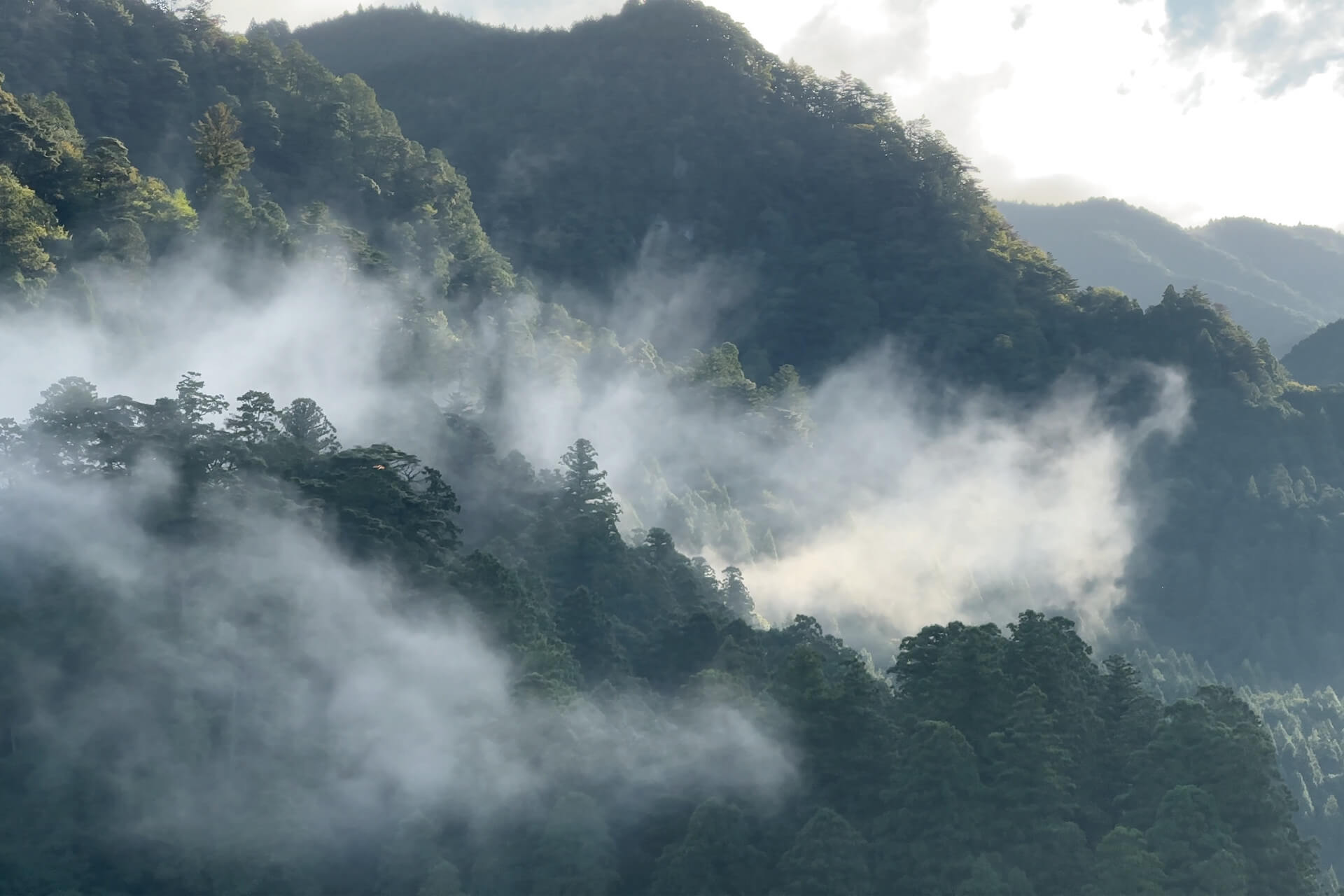
Kitaoka Honten in Yoshino, draws its brewing water from a stream fed by the deep mountains of Yoshino — low in iron, well-balanced in minerals, and the source of the brewery’s gentle, mellow flavors. Nishiuchi Shuzo in Sakurai, uses well water from the Tōnomine hills beside Tanzan Jinja. A temple called Myōrakuji once stood in this same area, and the sake it brewed there, Tōnomine-shu, was said to rival even Shōryakuji’s own sōbōshu in reputation. In Ikoma, Ueda Shuzo uses groundwater from a source celebrated as one of Japan’s “famous waters.” And at the foot of Mt. Kongō in Gojō, Gojo Shuzo draws on fukuryūsui — spring water that wells up naturally from a well — while cold winter winds blow down off Mt. Kongō wrap around the brewery, another piece of an environment well suited to brewing.
Even within the same prefecture, each brewery’s chosen water carries the memory of an entirely different piece of land. Six breweries; six stories of water.
Rice
Famous varietals, and a single grain unique to this place
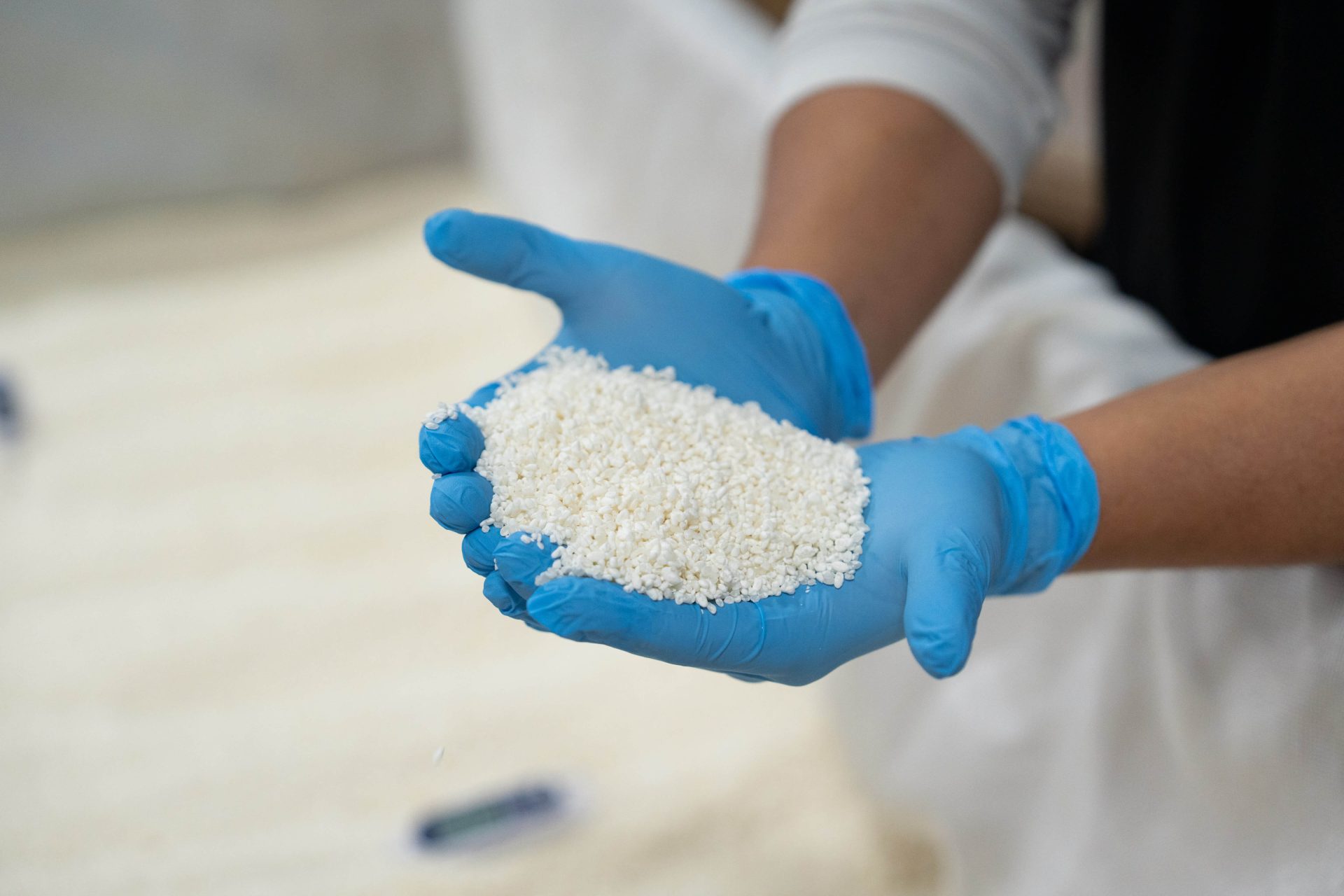
Rice is the other variable that separates one sake’s flavor from another. Rice grown specifically for brewing is known as shuzō kōteki mai — sake’s answer to a wine grape varietal — and three of these, Yamada Nishiki, Gohyakumangoku, and Miyama Nishiki, are used so widely across Japan they’re considered the “big three.” Yamada Nishiki lends itself to the clean, fragrant character of ginjo-style sake; Gohyakumangoku produces a full, rounded flavor; Miyama Nishiki, a gentle one.
Breweries in Nara use these familiar varietals too, but they also draw on rice grown specifically for Nara’s own climate. Tsuyuhakaze, grown only in Nara Prefecture, produces a complex flavor; nanatsuyu, bred from that same line, is known for floral aromas. Gojo Shuzo uses tsuyuhakaze in its junmai daiginjo “Mahoroba no Shizuku,” while also using Kinuhikari — an ordinary eating rice grown for the table rather than bred for brewing (shokuyōmai, as opposed to sake’s own dedicated varietals), raised by contract farmers without chemical fertilizer — in a separate tokubetsu junmai, giving even a single brewery real range in how it chooses its rice. Ueda Shuzo in Ikoma brews with nanatsuyu as well as carefully selected sake rice from elsewhere in Japan.
Which rice to choose is yet another decision that shapes the unique character of each brewery.
Brewing Process
Same blueprint, different cup
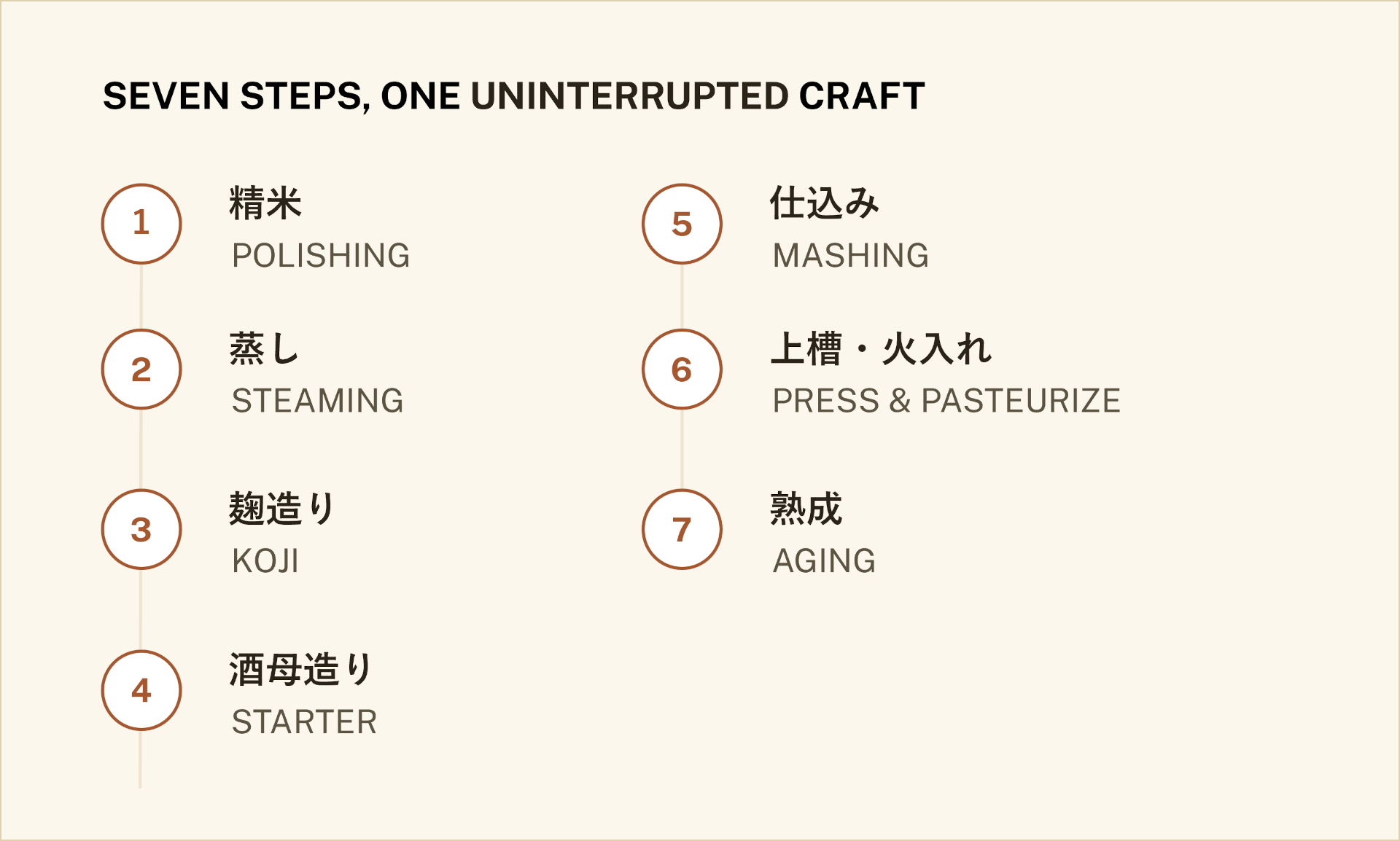
Even as water and rice vary from brewery to brewery, the skeleton of the brewing process itself is shared by all six. Polish the rice (seimai), steam it in a koshiki, make the koji, cultivate the starter culture (shubo), build the moromi — the fermenting mash — press it, pasteurize it, and let it age. This is the same sequence Shōryakuji established in the Muromachi period, still followed today.
But following the same skeleton doesn’t mean arriving at the same sake. At every stage of the process, a brewery faces a string of choices, and each one reshapes how the finished sake tastes. Take just how far the rice is polished: its seimai buai, the percentage of the original grain left once polishing is done. Polish deep, and the flavor comes out clean and free of rough edges; hold back on the polish, and the sake leans toward something more complex and full-bodied. The same is true at the pressing stage. Let the sake drip freely from suspended cloth bags under its own weight — a method called fukurozuri — and the result is a delicate sake with almost nothing rough left in it; press the mash mechanically in a traditional wooden trough instead — fune shibori — and the sake takes on a different shape entirely. It’s a distinction close to the one wine drinkers know as free-run juice versus press wine. Whether to pasteurize is another choice. Skip that heat treatment (hi-ire) on purpose, and you get namazake — unpasteurized sake, fresh and still very much alive, closer in spirit to an unfiltered craft beer. This is why the same blueprint can produce such completely different cups.
Bodaimoto & the Old Ways
Bodaimoto — a technique lost once, now kept alive by only a few breweries
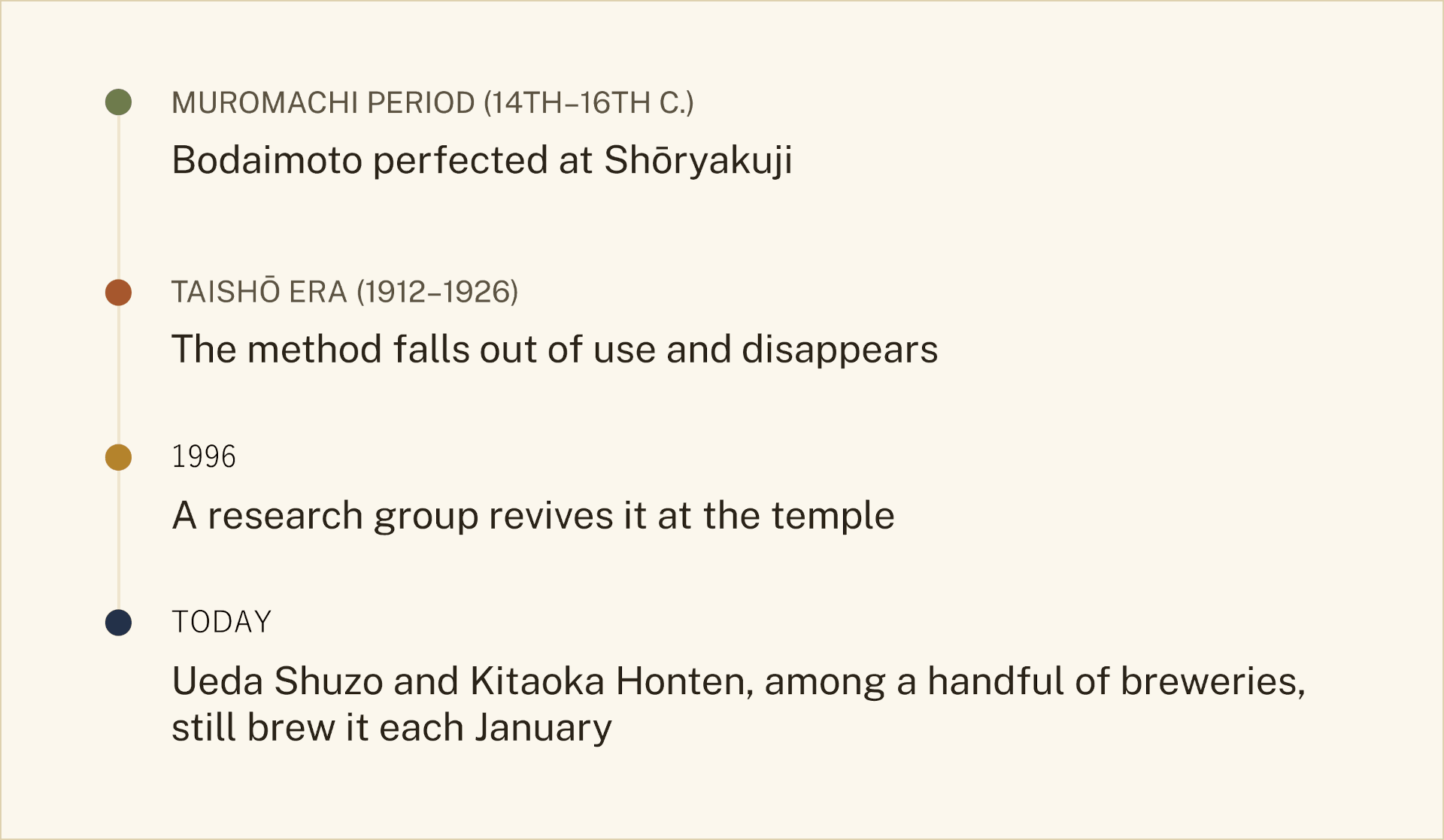
Bodaimoto, believed to be Japan’s oldest sake starter culture and developed by Shōryakuji’s own monks, disappeared for a time during the Taishō era. A research group revived the technique in 1996, but even now, only a handful of breweries brew with it. One of them is Ueda Shuzo of Ikoma, on this tour. Founded in 1558 and still guided by traditional methods, the brewery joins Shōryakuji’s bodaimoto brewing every January. Kitaoka Honten in Yoshino also uses Shōryakuji’s bodaimoto — in a sake named for Yatagarasu, the three-legged crow of Japanese mythology and a guiding deity: “Yatagarasu Bodaimoto Junmai.”
It isn’t hard to see why this story resonates so strongly with North American craft beer fans and natural wine lovers: there’s something instantly recognizable in the choice to take the harder, less controllable path on purpose.
Water, rice, environment — each of the six breweries differs in every one. The next chapter, “Six Breweries,” looks at all six: six breweries, six philosophies.