Chapter One
Before the brewery, there was a shrine.
The story of sake doesn’t begin in a brewery. It begins on a mountain. In Sakurai, Nara Prefecture, Ōmiwa Jinja is one of Japan’s oldest shrines — with no main sanctuary, because the mountain behind it, Mount Miwa, is itself worshipped as the god. The deity enshrined there, Ōmononushi no Ōkami, has been revered since mythic times as the god of nation-building — and, just as fervently, as the god of sake brewing. For breweries across Japan, this shrine still functions as something like the head shrine of the craft itself.
Legend has it that during the reign of Emperor Sujin, when a plague swept across the land, Ōmononushi no Ōkami himself instructed that sake be brewed and offered to him. The man who answered that call, Takahashi Ikuhi no Mikoto, brewed a fine sake in a single night that is said to have ended the plague — and is honored today as the founding ancestor of the toji craft, Japan’s word for a brewery’s master brewer, its equivalent of a winemaker. Brewery owners and toji from across the country still gather at Ōmiwa Jinja every year, and it isn’t mere custom. For them, this shrine is the origin point of their own work.
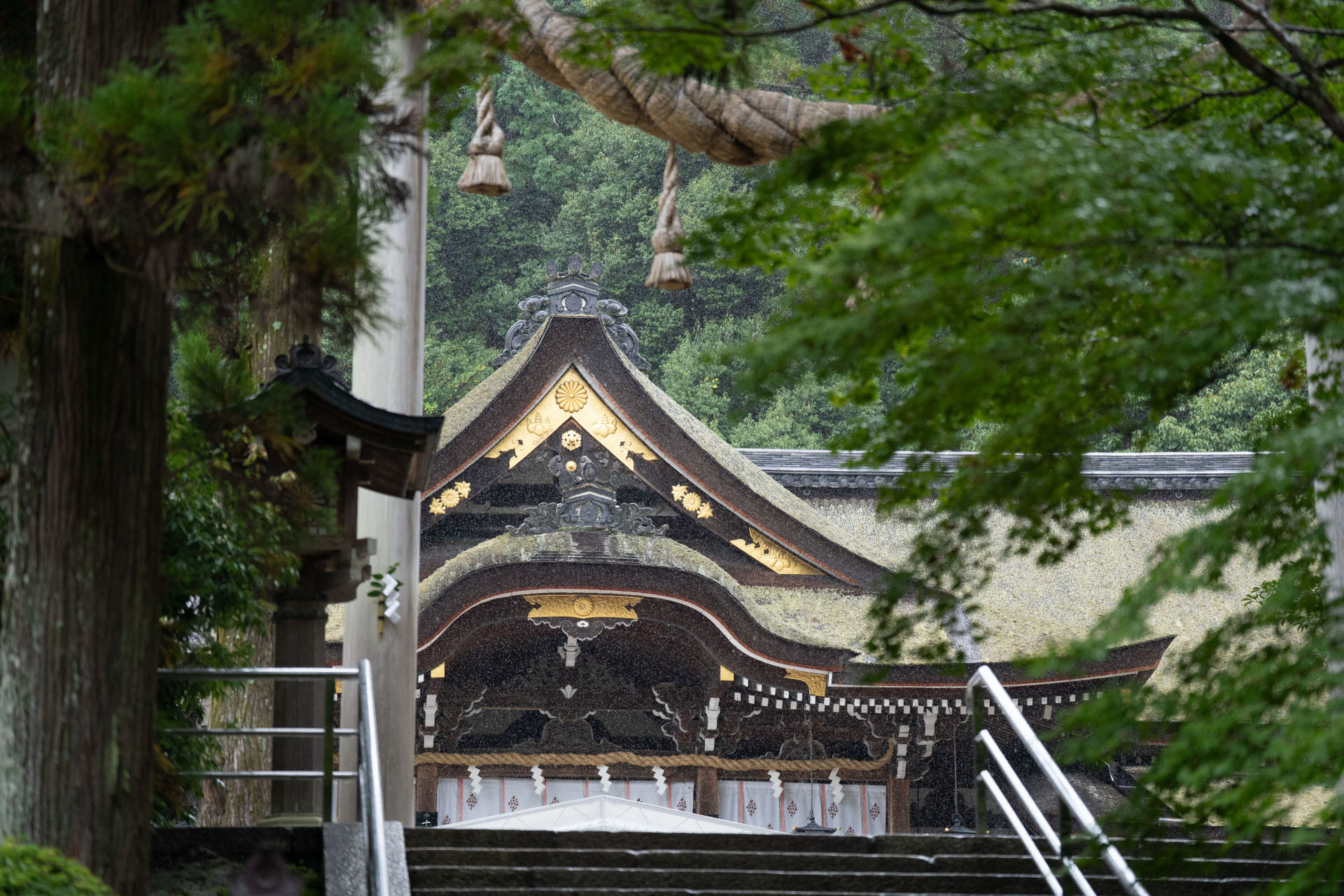
Ōmiwa Jinja
The Cedar Ball: A Calendar That Marks the Aging of Sake
Every November 14th, Ōmiwa Jinja holds the Jōzō Anzen Kigansai, a festival praying for a safe brewing season, and hands out sugidama — balls of cedar cut from Mount Miwa itself — to breweries all across Japan. Freshly hung under a brewery’s eaves, a sugidama is a vivid green: a brewery’s own “new sake is ready” sign. Over the roughly one year that follows, it fades slowly to brown, and its changing color closely tracks the aging of the sake. Anyone walking past a brewery can read the sugidama and know, at a glance, how far along the sake has come. It’s a simple, elegant way of making something invisible — the passage of time inside a fermenting tank — visible to anyone who looks up.
Shōryakuji Temple
Sake-Brewing Innovations in the Age of Medieval European Monasteri
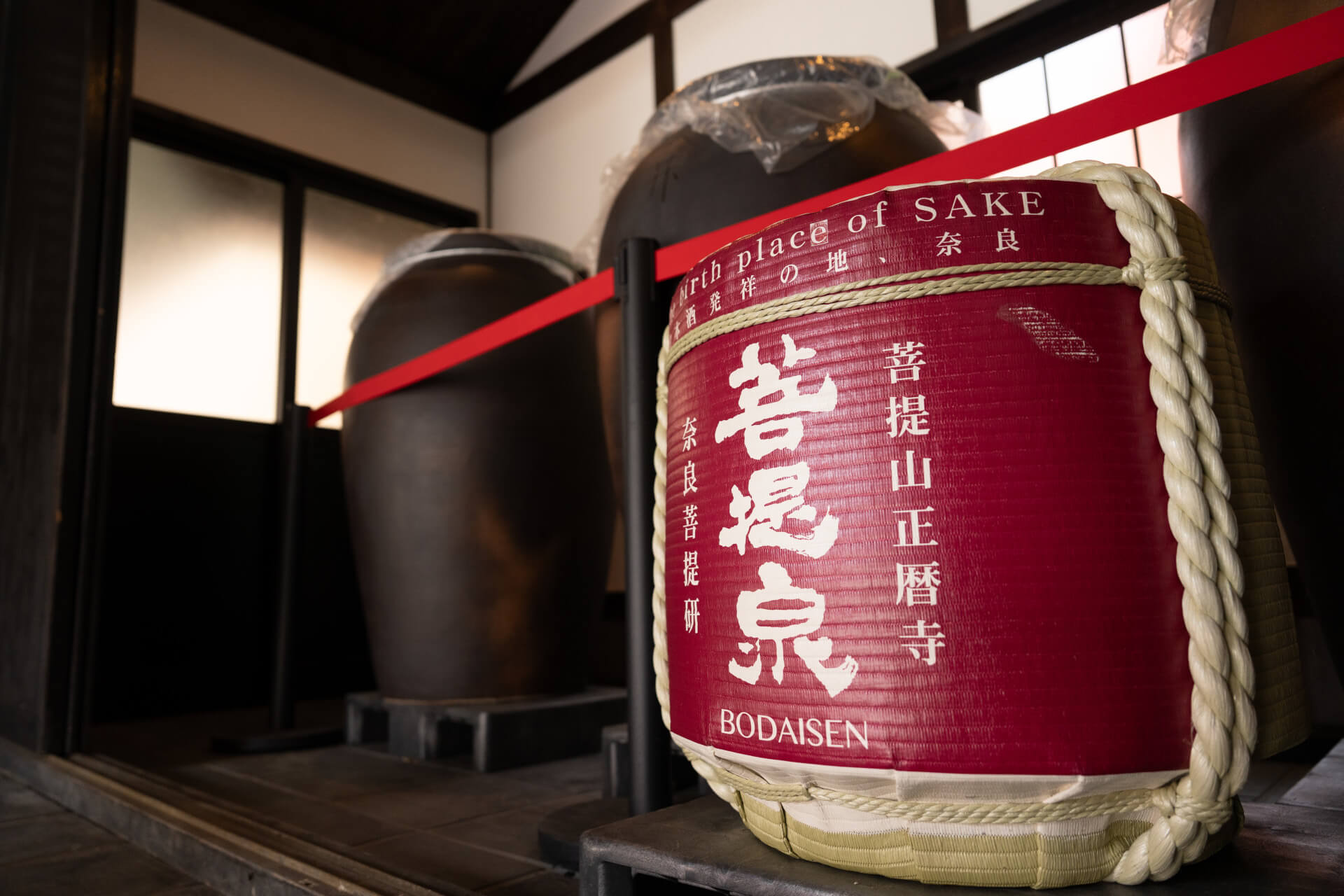
Shoryakuji Temple stands in the mountains about 10 kilometers north of Omiwa Shrine. It was founded in 992 by imperial decree of Emperor Ichijo. At its founding the temple already held 86 sub-temples — at its peak, as many as 120 — known as bō, each its own small community of resident monks, making Shōryakuji less a single temple than a small religious city. What funded a complex of that size was sōbōshu: sake the monks brewed and sold themselves. At almost the same moment medieval European monks were refining the craft of monastery beer, the monks of Shōryakuji were making their own quiet breakthroughs in sake brewing.
Four techniques, above all, define what they achieved:
Bodaimoto
Lactic-acid yeast starter
Morohaku
Fully polished white rice
Sandan jikomi
Three-stage brewing
Hi-ire
Pasteurization
These techniques were recorded in two brewing manuals — the Goshu no Nikki, written sometime in the 14th–16th centuries (Japan’s Muromachi period), and the Dōmō Shuzōki, from the early 17th century (the early Edo period) — and were carried forward into what came to be called Nanto Morohaku, sake once judged the finest in the land. Every bottle of refined sake made today traces back to a single laboratory: Shōryakuji.
Familiar Territory
A story you may already know
It’s been barely 50 years since Napa Valley put itself on the world’s map with the 1976 “Judgment of Paris.” America’s craft beer culture didn’t take root until the 1980s. But in Nara, more than 500 years earlier, a single temple achieved a brewing breakthrough whose methods are still in active use today. In December 2024, “Traditional Sake-Making” was inscribed on UNESCO’s Representative List of the Intangible Cultural Heritage of Humanity — Japan’s 23rd such inscription, and a global recognition that koji-based brewing techniques had been carried forward not just into sake, but into shōchū, awamori, and mirin alike.
| Region | Turning Point | What Changed |
|---|---|---|
| Nara, Japan | Shōryakuji perfects its technique, 1400s | Cloudy rice wine became clear, stable, refined sake |
| Napa Valley, USA | The Judgment of Paris, 1976 | New World wine won global recognition |
| United States | The craft beer movement, 1980s– | Consumers began asking who made their beer, and how |
To visit Nara is to experience, at its very source, the same “return to origins” story that craft beer and natural wine have each told in their own way.